

May
Share
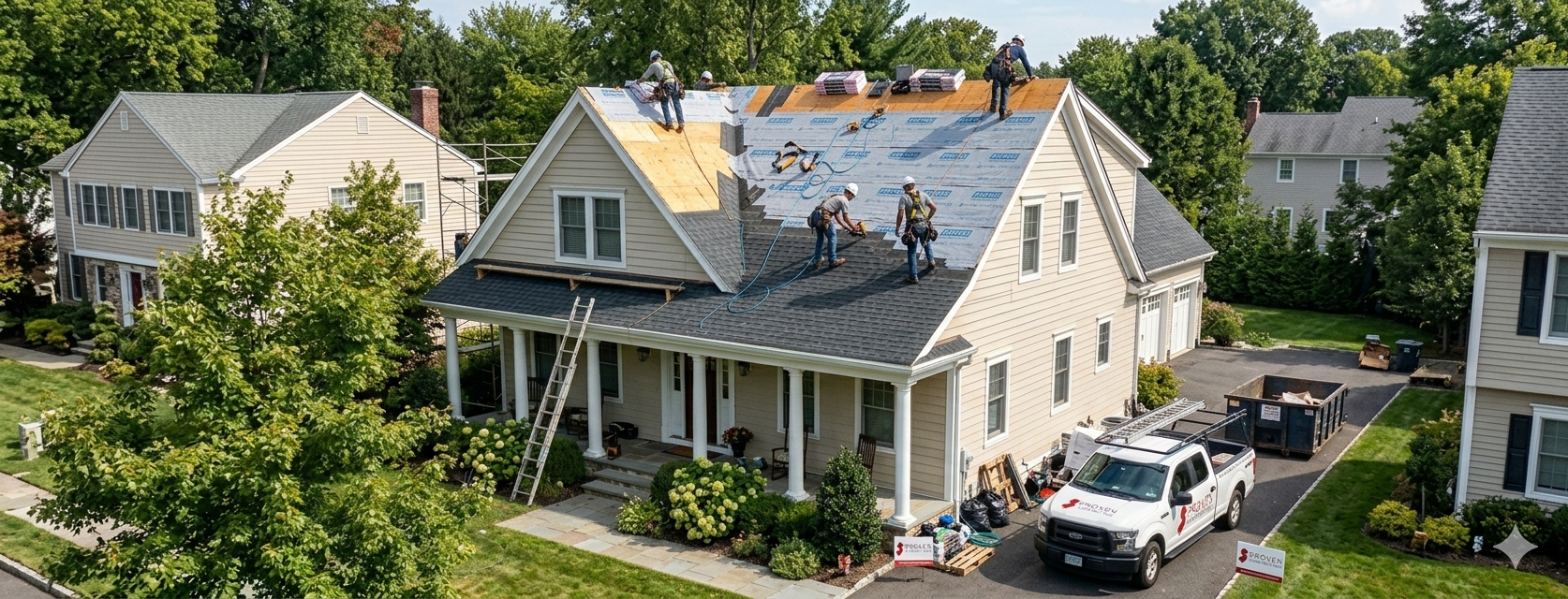
Comments Off on Does a New Roof Increase Home Value? Everything You Need to Know Uncategorized
Does a New Roof Increase Home Value? Everything You Need to Know
Does a New Roof Increase Home Value? Everything You Need to Know
Your home is probably the most valuable asset you own. So before you spend $10,000 to $20,000 on a new roof, you want to know if that investment actually moves the needle.
Short answer: yes.
But the full picture is more useful than a one-word answer. Whether you’re listing this spring, planning to sell in a few years, or just trying to make a smart financial call on a roof that’s seen better days, this post breaks down the real numbers behind getting a new roof to increase your home’s value, along with the honest tradeoffs, and what New Jersey homeowners need to know.
Key Takeaways
- A new roof recoups roughly 57 to 60% of its cost at resale, according to the JLC Cost vs. Value 2025 report, outperforming most major interior renovations.
- Beyond the dollar figure, a new roof directly affects buyer confidence, home inspection outcomes, and how fast your home sells.
- Neutral roof colors consistently perform best for resale value.
- In New Jersey, where coastal weather and freeze-thaw cycles shorten roof lifespans, buyers pay close attention to roof age and condition.
Does a New Roof Increase Home Value?
Yes. But the more important question is: in what ways, and by how much?
The value doesn’t always show up as a clean line item on an appraisal. Some of it shows up in how fast your home sells. Some of it shows up in whether you avoid a brutal negotiation at closing when a buyer’s inspector flags your 22-year-old shingles. And some of it is harder to quantify, like a buyer simply feeling confident enough to make a strong offer without hesitation.
What the data confirms is that roofing is consistently one of the best-performing exterior upgrades you can make. The JLC Cost vs. Value 2025 Report found that 8 of the top 10 home improvement projects with the highest ROI are exterior replacements. Roofing sits firmly in that category.
Market Value vs. Appraisal Value
These two terms get used interchangeably, but they’re not the same. Market value is what a buyer is willing to pay. Appraisal value is what a licensed appraiser determines based on comparable sales, property condition, and improvements. A new roof can influence both, but it tends to have a bigger effect on market value.
Appraisers assign value to a roof based on its condition and remaining useful life. A 3-year-old roof is treated very differently from an 18-year-old one with granule loss and curling edges. That gap can show up directly in your appraised value and affect how much a buyer can actually finance, which matters in a rate-sensitive market.
Understanding the Impact of a New Roof on Your Property Value
A new roof doesn’t just raise a number on an appraisal form. It affects your home’s value in several connected ways. Understanding each one gives you a much clearer picture of what you’re actually getting when you make this investment.
1. Your Home’s Curb Appeal
Your roof covers roughly 25 to 40% of your home’s visible exterior. That’s not a detail. It’s one of the first things a buyer registers when they pull up for a showing.
A stained, sagging, or worn-out roof sends a signal before anyone steps through the front door. A clean, new roof does the opposite. It tells buyers the home has been maintained, that there aren’t surprises waiting inside, and that this property is worth serious consideration.
2. “Move-In Ready” Homes
New Jersey buyers, especially in today’s market, want homes they can move into without a project list. A new roof removes one of the biggest items from their mental checklist. For sellers, that translates directly into fewer concessions at the negotiating table and a cleaner path to closing.
3. Home Inspections
This is where an aging roof quietly costs sellers thousands. Home inspectors flag roofing issues more often than almost any other system in the house. When that happens, buyers have leverage, and they use it. They’ll ask for a price reduction, demand a repair credit, or simply walk.
A new roof eliminates that entire category of risk. The inspection moves past the roof without a flag. The deal moves forward without a fight over something you knew needed attention anyway.
4. Structural Integrity (Peace of Mind)
An aging roof isn’t just a cosmetic issue. Once shingles start failing, water finds its way in. From there it spreads into decking, attic insulation, drywall, and sometimes the electrical system. By the time a homeowner notices a ceiling stain, that damage has often been building for weeks or months.
Buyers and their agents know this. An old roof signals potential hidden damage that hasn’t surfaced yet. A new roof removes that concern entirely, and that’s a real, quantifiable part of what you’re selling.
5. Energy Efficiency and Modern Roofing Materials
When it comes to the best roofing materials that will increase your home’s value, there are a few factors to consider. The shingles installed on homes 20 to 25 years ago are no match for what’s available today.
Modern roofing systems with proper ventilation, high-performance underlayment, and reflective technology can reduce energy costs significantly. In New Jersey, where summers get hot and winters are relentless, that efficiency matters to buyers and to your utility bills in the meantime.
6. Transferable Warranties
A quality roof installed by a certified contractor typically comes with a transferable manufacturer’s warranty, sometimes covering 30 to 50 years on roof materials. That roofing warranty passes to the new owner at closing.
For buyers, it’s not just a nice extra. It’s real protection on a major system they won’t have to think about for decades. In a competitive listing environment, that kind of coverage is a genuine differentiator.
7. Increased Asking Price
Put it all together and yes, a new roof supports a higher asking price. Sellers in competitive markets use a recent installation as a feature, not a footnote.
“New roof installed in [year]” is one of those phrases that stops buyers mid-scroll. It signals the home has been maintained at the most fundamental level, and that confidence shows up in offers.
How Much Does a New Roof Increase Home Value? Here’s What the Numbers Say
Let’s get into the actual figures.
According to the JLC Cost vs. Value 2025 report, an asphalt shingle roof replacement delivers an ROI of approximately 57 to 60% nationally. That means if you spend $15,000 on a new roof in New Jersey, you can reasonably expect to recover somewhere between $8,500 and $9,000 of that through increased home value at resale.
That might sound like you’re leaving money on the table. Consider the comparison. A midrange kitchen remodel costing around $80,000 recovers only about 49.5% of its cost. A high-end bathroom addition? Just 32.6%. Roofing consistently outperforms most interior upgrades homeowners assume are the “smart” pre-sale investments.
There’s also the cost of doing nothing. An old roof that triggers a failed inspection, a repair credit demand, or a lowball offer can cost you far more than the replacement itself would have. By the time a buyer has leverage, you’ve already lost control of the negotiation.
The indirect impact matters too. Homes with new roofs spend fewer days on market. Buyers make stronger initial offers when they aren’t mentally subtracting future capital expenses from their number.

The NAR’s 2025 Remodeling Impact Report found that 43% of realtors have seen an increased demand for new roofing. Additionally, 37% of realtors themselves recommend new roofing as a pre-sale upgrade, making it one of the most consistently endorsed improvements in the industry.
New roofing was also one of only three projects to earn a perfect 10 out of 10 Joy Score in that same report, meaning homeowners who completed the project reported among the highest satisfaction of any home improvement category.
See What a New Roof Could Do for Your Home’s Value
If you’re a New Jersey homeowner thinking about selling, or just trying to make a smart call on a roof that’s getting up in age, a professional assessment is the right place to start. You don’t have to guess what condition your roof is in or estimate what a replacement might mean for your home’s value.
Proven Contracting serves homeowners across Toms River, Bayville, Brickville, and beyond with roofing, siding, and gutter services grounded in honest assessments and quality work.
Get started with a free roofing estimate near you. No pressure, no runaround. Just a clear picture of where your roof stands and what your best options are.
Frequently Asked Questions
Should I Replace My Roof Before Selling?
If it’s over 20 years old, showing visible wear, or has come up in a prior inspection, replacing vs. repairing your roof before listing is usually the smarter financial move. You control the cost, you pick the contractor, and you get to market the upgrade as a feature. Waiting for a buyer to find the problem means negotiating from a weaker position, often for more than the replacement would have cost you upfront.
If your roof is in genuinely good condition, a professional inspection and solid disclosure are likely all you need.
Will a New Roof Increase My Appraisal Value?
It can, though the effect varies by market. Appraisers account for roof condition and remaining useful life in their assessment. A 2-year-old roof carries a different value than a 20-year-old one. What a new roof does most reliably is prevent a negative adjustment to your appraisal. A roof flagged as “at end of useful life” can pull an appraised value down directly, which is often the bigger risk for sellers who wait.
What Color Roof Is Best for Resale?
Neutral, timeless shades consistently appeal to the broadest pool of buyers. According to GAF, the top trending shingle colors for 2025 are Charcoal, Weathered Wood, Pewter Gray, and Barkwood. These four are strong resale choices because they complement a wide range of siding colors and architectural styles without painting future owners into a corner aesthetically.
Is a New Roof a Good Investment?
For most New Jersey homeowners, yes. A new roof delivers ROI across several categories at once: direct recovery at resale, protection from inspection-driven negotiations, potential insurance premium reductions, lower energy costs, and coverage from a long-term transferable warranty. Few other home improvements deliver that kind of broad, compounding return.
The question isn’t really whether it’s a good investment. It’s whether the timing is right for your specific situation.
Curious to see how much a new roof would cost you? Click here for our free roofing calculator to help you plan your project, compare options, and budget with confidence.