

Apr
Share
Comments Off on Roof Repair vs. Replacement: 9 Deciding Factors for New Jersey Homeowners Uncategorized
Roof Repair vs. Replacement: 9 Deciding Factors for New Jersey Homeowners
Key Highlights
- Roof repair vs. replacement decisions in New Jersey hinge on a “25% rule”; if repairs exceed a quarter of the replacement cost, a full install is usually the smarter financial move.
- The age of your roofing system is a primary decider, as shingles older than 20 years often become too brittle for new materials to bond effectively during a roof restoration.
- Water damage that is widespread across multiple rooms typically signals total underlayment failure, making a full roof replacement necessary to protect the building’s structural integrity.
- Choosing to save money with a roof repair is ideal for localized issues like a single puncture or loose flashing, provided the rest of the shingles or metal roofing are in good health.
- Your future property plans, such as staying for decades versus selling soon, dictate whether you should prioritize the high ROI of a new roof or the immediate fix of a roofing contractor.
New Jersey weather is relentless. Whether you are in Toms River, Bayville, or Brick, a single storm can leave you questioning the integrity of your shelter. The dilemma of roof repair vs. replacement often boils down to a mix of anxiety over immediate costs and the long-term safety of your family. You need to know if a quick fix is a smart way to save money or just a temporary bandage on a terminal problem.
This post clarifies those differences. We explore timelines, material ROI, and the specific signs that dictate your next move. By demystifying the repair vs. replace roof debate, we help you protect your property with total confidence. Understanding these factors now prevents expensive water damage later.
Top Causes of Roof Damage
Extensive roof damage may catch you off guard, but the good news is well-installed and maintained roofs can last 30 years. Regular inspections and roof patching can help keep a roof functional longer.
The wear and tear of a roof is unavoidable and is affected by these factors.
Weather Damage
Think about it: rain, hail, sun, wind, storms, hurricanes… your roof bears it all through the different seasons. Weather is the main reason for roof wear and tear.
Rain is the major culprit in roof damage. It’s imperative that step flashing is correctly installed for proper drainage of rainwater.
Stagnant water on a flat roof causes mold and vegetation growth. This results in the deterioration of the roof.
When hail hits the roof, it causes an indentation on the roofing material. This results in roof leaks.
Though it’s impossible to avoid weather damage on an old roof, it’s important to have a roofing expert come and inspect it, especially after a major storm.
Ventilation and Insulation of the Attic
The proper ventilation and insulation of an attic are crucial to keep a roof in good shape.
Intake and exhaust vents allow continuous circulation of air which helps preserve the durability of a roof.
During the colder months, warm air caused by activities inside the building rises through the ceiling and builds up in the attic. Without an outlet, the warm air turns into water vapor which causes the roof sheathing to rot.
In warm weather, a poorly ventilated attic will cause overheating. Combine that with humidity-related moisture and you have molding and rotting of insulation and a leaking roof.
Poor workmanship
After you’ve invested your money in a roof, you expect it to last as long as possible to get value from your money.
Poor workmanship by an inexperienced roofing contractor is a nightmare for homeowners. If you have a leaky roof only a few years after installation, you’ll be counting losses.
An experienced roofing contractor will do a clean job and your roof will last longer, giving value for your investment. When it comes to patching or replacing a roof, they’ll also advise on the best way forward.
What is Roof Repair?

Compared to a full roof replacement, a roof repair or restoration fixes the integrity of the current system to address specific leaks or wear. This ensures your home remains watertight against the unpredictable New Jersey weather. It is often the most cost-effective way to handle isolated incidents of water damage before they spread to the attic or drywall.
The Roof Repair Process
- Comprehensive Inspection: Professional roofing contractors use a trained eye to locate the exact entry point of water. They look beyond the surface to identify hidden water damage that a DIY attempt might overlook.
- Property Protection: High-quality roofing teams prioritize your property. They deploy the ‘Catch-All’ system to ensure your landscaping and siding remain untouched by debris or nails during the repair.
- Material Matching: Professionals source shingles or metal roofing that matches your existing layout. This maintains the visual continuity of your home while using high-performance sealants for a watertight finish.
- Cleanup and QA: A professional repair concludes with a rigorous inspection. This ensures the fix is permanent and that your property is left in better condition than it was found.
What is Roof Replacement?

This roofing service is designed to eliminate persistent leaks and structural concerns that minor repairs simply cannot address. We do this to ensure no hidden water damage or rot remains to compromise your new investment. It is often the most strategic move for older NJ homes where the cost of repeated repairs begins to outweigh the price of a total upgrade.
The Roof Replacement Process
- Planning and Estimation: This phase begins with absolute clarity. Homeowners use a Roofing Cost Calculator to establish a baseline budget, followed by a professional consultation to select roofing materials that offer the best ROI for the New Jersey climate.
- Site Safeguarding: Professionals set the stage by fully implementing the ‘Catch-All’ system. This protects your flower beds, lawn, and deck from the thousands of pounds of old shingles and nails that will be removed during the roofing project.
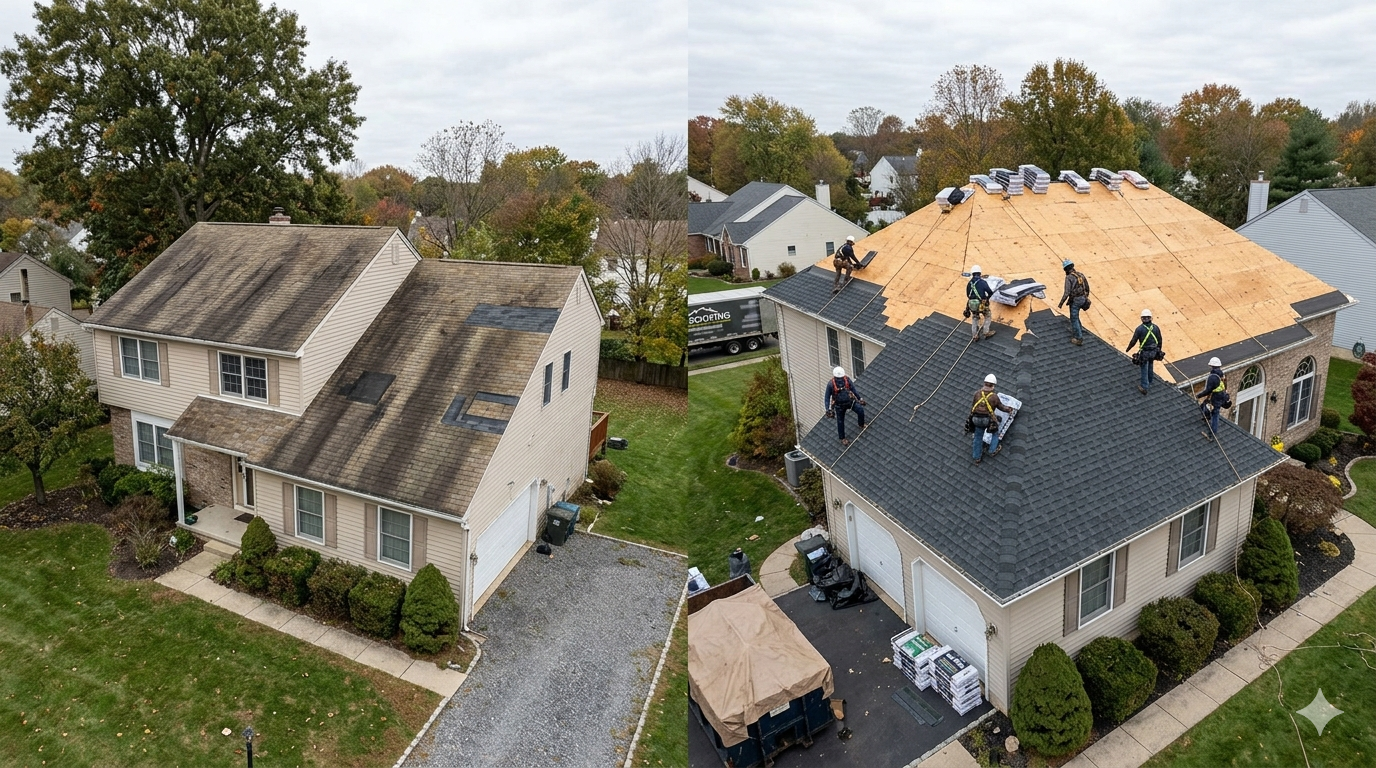
- Total System Tear-Off: Every layer of the old roofing is removed down to the structural plywood. This allows the team to identify and replace any rotted decking or structural issues that would otherwise compromise your new investment.
- Installation: The new roof is built from the deck up. This includes laying waterproof barriers in vulnerable valleys, installing high-performance underlayment, and securing shingles or metal roofing to strict manufacturer specifications.
- QA and Site Restoration: After the final shingle is laid, a lead supervisor performs a multi-point inspection. The property is then meticulously cleaned, leaving your home or business looking refreshed and entirely protected from the elements.
What is the Difference Between Roof Repair and Roof Replacement?
A roof repair fixes a specific problem.
This could include:
- Replacing missing shingles
- Fixing flashing around a chimney
- Repairing a small leak
- Sealing damaged areas
A roof replacement means removing the old roof and installing a new one. This usually includes a full tear-off down to the wood deck.
Repairs solve small problems. Replacement solves bigger or widespread problems. Now that you know all about the roof repair and replacement processes, let’s get into the factors to help you decide between repair vs. replace.
Repair vs. Replace Your Roof? 9 Deciding Factors for New Jersey Homeowners

1. Roof Age and Lifespan
The age of your roofing system is the most reliable predictor of whether a repair will actually hold. Most roofs are engineered to last between 30 and 50 years, but the harsh freeze-thaw cycles in the Northeast can often shorten that window. Even in New Jersey, most asphalt shingle roofs last about 20 to 25 years. Coastal areas like Ocean County can shorten that life due to wind and salt air.
Ask yourself:
- Is your roof over 20 years old?
- Has it already had several repairs?
- Do shingles look curled or brittle?
If the roof is near the end of its life, repairs may only delay the real issue.
If your roof is approaching the two-decade mark, the materials naturally become brittle, making it difficult for new repairs to bond properly with the old, weathered surface. In these cases, a full replacement is a more strategic investment, preventing the cycle of repeated repair costs and protecting the building’s structural integrity before a major failure occurs.
2. Amount of Leaks in your Roof
The frequency and distribution of leaks in your roof are often more telling than the size of a single drip. When a business or home experiences a solitary leak after a particularly punishing storm, a professional repair is usually the most logical and cost-effective path. This typically indicates a specific failure (such as a cracked vent boot or a loose piece of flashing) that can be sealed without overhauling the entire structure.
However, if you find yourself chasing multiple leaks in different rooms, the structural integrity of the roofing system is likely compromised. Water doesn’t always travel in a straight line, and several entry points often suggest that the underlayment has failed across a wide area.
For example, if a property owner in New Jersey notices water spots in both the warehouse and the front office, it is a clear sign that the roof has reached a state of general failure. In this scenario, continuing to pay for individual roof patches is a “sunk cost” that merely delays an inevitable, and more protective, replacement.
3. Roof Material

Consider a commercial building with a flat EPDM membrane versus a residential home with architectural shingles. If the shingle roof is shedding granules and curling at the edges, the material itself is telling you it can no longer shed water effectively, making replacement necessary. Conversely, a sturdy metal roof with a single punctured panel can often be restored to full functionality with a professional patch. Understanding the “failure mode” of your specific material helps you decide if you are looking at a simple fix or a total upgrade.
4. Timing and Urgency
Urgency is often dictated by the severity of the damage and your immediate plans for the property. A catastrophic event, like a fallen tree limb or major structural displacement, creates an immediate need for a full replacement to keep the building habitable. In these high-pressure moments, a professional assessment is vital to ensure that the “quick fix” doesn’t trap moisture inside the attic or ceiling, leading to mold growth and compromised air quality.
If the damage is cosmetic or a minor nuisance, you may have the luxury of time to plan and budget. For instance, a homeowner who notices a few shingles blow off after a windy weekend can likely opt for a rapid repair to stay watertight through the season. But if that same homeowner is planning to sell the property within the next year, investing in a full replacement now can provide a significant boost to the resale value and pass a home inspection with flying colors. Weighing the immediate necessity against your long-term goals ensures you aren’t caught off guard.
5. The Extent of Roof Damage
Not all damage is created equal when it comes to roof repair versus replacement. Determining whether a roof has suffered a blow to its visual appeal or its foundational strength is a major factor in the repair vs. replace debate. While some issues are purely cosmetic, others indicate that the barrier between the New Jersey elements and your interior has been fundamentally broken.
Structural vs. Aesthetic
- Structural Roof Damage: This refers to damage that compromises the roof’s ability to support weight or shed water, such as sagging rooflines, rotted decking, or compromised rafters. Because it threatens the safety of the entire building, structural issues almost always necessitate a full roof replacement to ensure the property remains sound and up to code.
- Aesthetic Roof Damage: This involves surface-level issues like minor staining, moss growth, or a few discolored shingles that don’t actually let water into the building. While it affects curb appeal, aesthetic damage can often be handled through professional cleaning or minor repairs, allowing property owners to save money and not worry, while maintaining a sharp look for their home or business.
6. Location and Seasonality

For a local business owner, the timing of the project is just as vital as the location. Trying to coordinate a major roof replacement in the middle of a brutal winter is difficult and can lead to higher labor costs. If you have a manageable leak in November, a professional repair is often the smartest move to get you through until spring. However, if the structure is already failing, waiting through another season of snow and ice could lead to massive water damage inside the walls.
7. Insurance and Storm History
New Jersey property owners often overlook how their insurance policy influences the repair or replacement decision. If your roof has been damaged by a specific, documented storm event (like a hurricane or a major hail storm) your homeowners’ insurance may cover the cost of a full replacement. In these instances, opting for a simple repair out of pocket is often a missed opportunity to fully restore your property’s value with minimal financial impact.
A professional roofing contractor can help you navigate this by identifying “storm-related” versus “wear-and-tear” damage. For example, if a heavy branch punctures your roof during a summer storm, insurance typically covers that specific repair. But if an inspection reveals that the same storm caused widespread shingle lifting across the entire surface, you might qualify for a total replacement. Understanding your storm history ensures you aren’t paying for a replacement that your policy should already cover.
8. Future Home Plans
Your long-term goals for the property are a major deciding factor in the scale of roofing services you choose. If you plan on staying in your current home for the next twenty years, a full roof replacement is a proactive move that offers total peace of mind and eliminates the headache of recurring maintenance. Investing in high-quality materials now means you won’t have to worry about your roof again for the duration of your residency.
On the other hand, if you are planning to put your business or home on the market in the next few months, your strategy changes. A professional repair can address immediate leaks and ensure the building passes a home inspection without the massive upfront cost of a replacement. However, be aware that savvy buyers in New Jersey often look at the age of the roof as a negotiating point. Sometimes, a fresh replacement can increase your asking price and lead to a much faster sale, providing a cleaner exit for your investment.
9. Labor and Material ROI

A full roof replacement, while more expensive, offers a much higher ROI by resetting that clock to zero and providing a new manufacturer’s warranty. For New Jersey businesses, this can also mean improved energy efficiency and lower utility bills, as modern roofing systems are much better at reflecting heat. If a repair is going to cost 25% or more of what a full replacement would, it is almost always more financially sound to go with the replacement. This move protects your property and your wallet from the “diminishing returns” of patching an old, tired system.
Patching a Roof vs. Replacement
Whether to replace or repair a roof may be a dilemma. Always seek the guidance of an experienced roofing contractor to guide you on how to go about it.
When to Replace a Roof
When a roof is maintained properly, it may go through its lifespan without any failure. However, if you delay a roof replacement, it may cause further deterioration and cost even more afterward.
Replace a roof when:
- The repair cost is more than half the price of getting a new roof.
- The roof has extensive damage after a major storm or other natural causes.
- Repairs have been done too many times.
When to Patch a Roof
A roof leak poses damage to your attic insulation and electrical wiring. It also poses damage to property. It’s imperative to repair a damaged shingle as fast as possible to avoid repairing the entire roof.
Use a roof patch when:
- The damage only requires minor repairs and a few shingles to stop roof leaks.
- You have a leaky roof and don’t have enough money to replace the entire roof.
- There are missing shingles on the roof, even if there are no leaks.
| Patch | Replace |
| Minor damage | Major damage by natural causes |
| Limited budget | The cost of repairs is more than 50% of the cost to install a new roof. |
| The roof is fairly new | The roof is old |
| You’re on short notice | The contractor advises a need to replace |
Roof Patch Repair and Maintenance Advice
Roof maintenance can help find roof leaks and solve problems in your roof before you’re obliged to replace the entire roof.
Besides, the proper maintenance of a roof will help it last longer, which means you get full value for your money.
Tips for Extending Your Roof’s Lifespan
- Do not postpone patching roof leaks as they cause further damage to your roofing system and could collapse your roof.
- Avoid having people walking on your roof as this weakens it and may cause damage.
- Get your roof cleaned regularly to remove moss, unclog gutters and drainage,
- In case of a major storm, have your roof inspected.
Your roofing contractor must ensure that your entire roof system is functional to avoid any unpleasant surprises.
Plan a Budget
Repairing an existing roof may cost a considerable amount of money. If you don’t have enough money, you can consider financing the cost of a new roof.
If you have insurance, it’s a good time to get in touch with your insurance company to file a claim.
Repairing damages on your home’s roof is highly determined by the roofing material and the time it will take a roofing professional to make the repair.
Hire a Roofing Contractor
Roof repair and maintenance should only be done by a roofing contractor that is qualified and licensed.
Your roofing contractor should be dependable and available when you need services. They should be able to work within a reasonable range of the agreed timeline.
Ensure that they work under high safety operations and offer high-quality services.
Go for a company that has been in your area for a while, it means they’re good at what they do.
Curious to Learn More About Roof Repair or Roof Replacement in New Jersey? Let’s Talk
Your roof is your first line of defense against everything from salt air to heavy snow. We’ve seen too many homeowners in Bayville and beyond get stuck in a loop of endless patches when a fresh start was the more cost-effective move. Understanding the difference between aesthetic wear and true structural damage is how you save money and gain peace of mind. You deserve a New Jersey roofing contractor who prioritizes transparency over a sales pitch.
Ready for a free estimate? Use our online Roofing Calculator or contact the Proven Contracting team in New Jersey today.
Roof Replacement vs. Repair: FAQs
What happens if you don’t repair or replace your roof?
Ignoring a roof issue is like leaving a window cracked during a storm; eventually, the outside finds its way in. Small leaks quickly evolve into saturated insulation, mold growth, and damaged rafters. In our experience, catching a “minor” drip early prevents a massive headache (and a much larger bill) down the road.
Does homeowners’ insurance cover roofing costs in New Jersey?
Typically, yes. If the damage is from a “sudden” event like a Nor’easter or fallen limb. However, standard wear and tear or neglect aren’t covered. We always recommend checking if you have Replacement Cost Value (RCV) or Actual Cash Value (ACV) coverage, as this determines your out-of-pocket total (NJDOBI; M&M Roofing).
When is roof replacement better than repairs?
Replacement is the winner when the “patchwork” approach costs more than 25% of a new system or when the underlying wood is rotting. If you’re constantly chasing leaks in different spots, a full structural reset is the only way to ensure your property (and everything inside it) stays truly bone-dry.
When is it time for a roof replacement?
It’s time to replace your roof, if your shingles are curling like potato chips or you’re seeing “bald spots” where granules have washed away, the material has given its all. Usually, at the 20-year mark, even the best-maintained NJ roofs start to lose their battle against the humidity and freeze-thaw cycles, signaling it’s time for an upgrade.
Is it cheaper to repair or replace a roof in NJ?
Short-term, repairs are cheaper, averaging $400 to $1,500 for typical fixes. However, a full roof replacement costs can range around $10,000 to $20,000 for most standard homes in 2026, is often the better long-term “deal” because it stops the cycle of expensive, recurring repairs. Choosing replacement resets your roof’s warranty and significantly boosts your property’s resale value.
Ready for a clear estimate? Contact the Proven Contracting team in New Jersey today!